For end consumers, discreteness is the single most critical quality determinant alongside tactile sensation. An otherwise powerful reciprocating or rotating device that emits an audible high-frequency buzz over 55 decibels creates anxiety and degrades the user experience.
Engineering intimate devices that maintain high kinetic torque while registering below 45 dB (whisper-quiet threshold) requires a holistic approach to kinematics and sound dampening.
Sources of Acoustic Noise in Intimate Hardware
- Electromagnetic Commutation Whine: Poorly shielded DC brush motors generate high-frequency electrical hum.
- Gear Mesh Vibration: Traditional spur gears suffer from tooth-to-tooth impact chatter during acceleration.
- Structural Cavity Resonance: Hollow ABS shells act as acoustic amplification chambers if left undamped.
BOHOL’s Tri-Layer Vibration Isolation Architecture
- Custom-Wound Coreless Motors: Utilizing rare-earth neodymium magnets and dynamic rotor balancing (< 0.1 mg balancing tolerance).
- Helical Planetary Gearboxes: Replacing straight-cut spur gears with high-precision POM helical planetary assemblies, ensuring continuous tooth contact ratio > 2.2.
- Liquid Silicone Suspension Cradles: The motor assembly is suspended within a custom-molded silicone cradle, preventing direct vibrational transfer to the outer ABS structural frame.
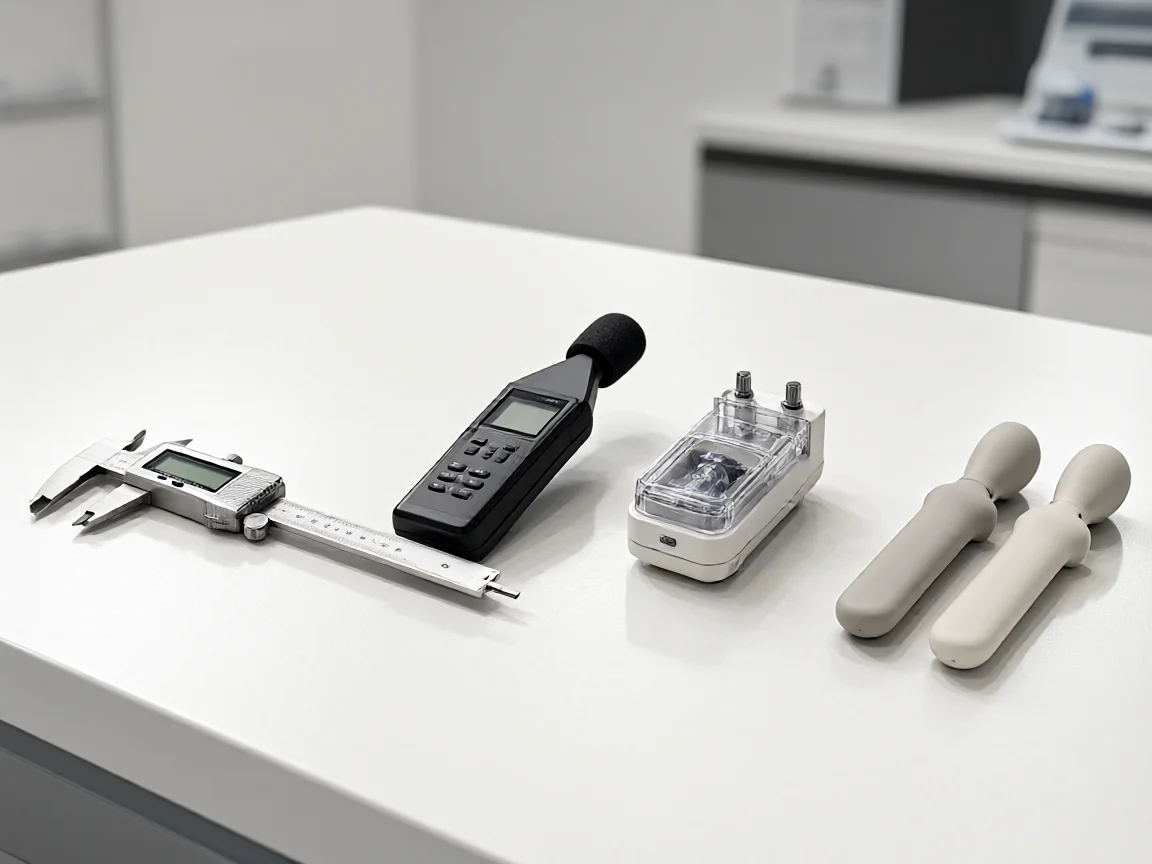
Every mass-produced batch is sampled in BOHOL’s dedicated anechoic soundroom, where sound pressure level (SPL) is logged at a standardized distance of 30 cm across all vibration speed levels.